

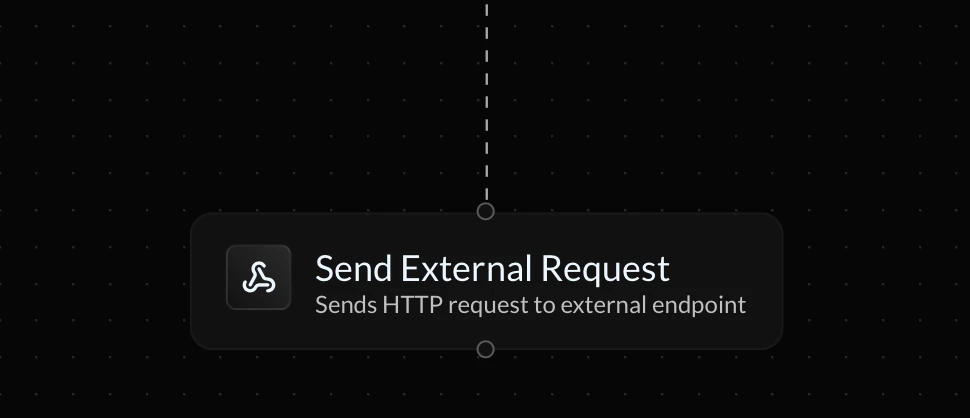
Block Name
The block name is the reference name for the request that will correspond to the response variables you can use in future actions.If a future block is assigned the same name, the value of your reference variable may be overriden.
Request URL
The request URL is the URL that the API request will be sent to. Query parameters can also be included in the URL, as shown below:Method
The method is the type of API request that will be sent. Refer to the API provider’s documentation for information on which one to choose.HTTP Headers
TheHTTP headers allow you to attach extra information to your request, such as authentication tokens or request metadata. Up to 10 key-value pairs may be configured per request.Request Body
All request methods exceptGET requests also include a request body. This is where most extra information and inputs are placed in a request. Refer to the API provider’s documentation for information on what to add.