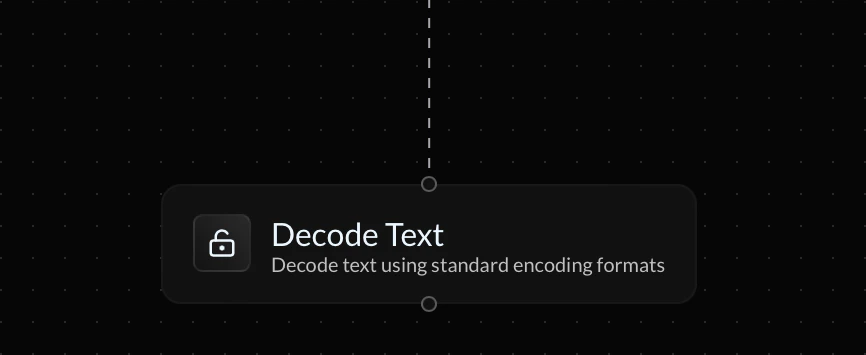
The Decode Text action allows you to decode text from various different formats into standard readable text. Decoding is required when a service (such as an external API) provides an encoded form of text that you need to decode and use in your endpoint.
Input Text
The input text is the base text value that will be decoded. This may be static text or a variable.
Encoding Method
The encoding method is the format of encoding that your text value is in. Below are listed the available formats that a text value can be decoded from using the Decode Text action:
Reference Variable
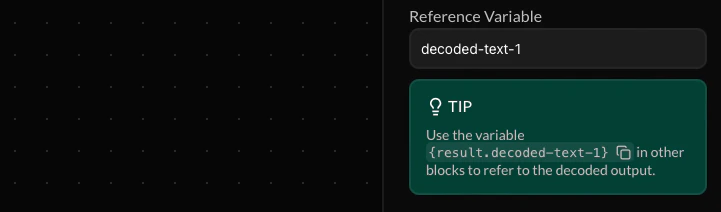
This variable allows you to refer to the result of the text decoding in future action blocks down your endpoint’s flow. This variable must be assigned a custom name.
Make your reference variable names as descriptive and unique as possible to prevent your endpoint flow from becoming cluttered. If a future variable is assigned the same name, the value of your reference variable will be overriden.